


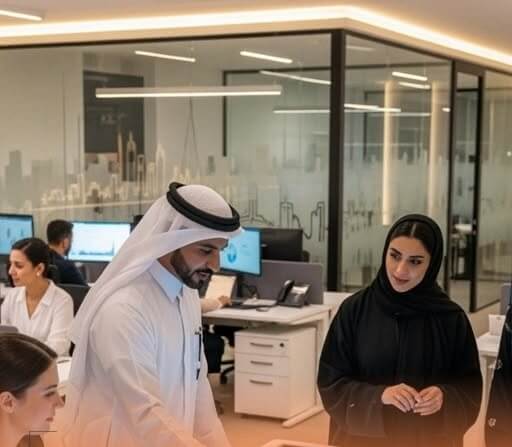
Qatar has emerged as a leading example of workforce stability in the Gulf region. According to the GCC Statistical Center, the country recorded an unprecedented unemployment rate of 0.1% in Q2 2024. Such a figure underscores Qatar’s nearly full employment status, highlighting its position as a benchmark for other Gulf states.
A key factor is the country’s large expatriate workforce, which makes up 84.5% of the labor market. These workers, drawn from around the world, fill critical roles across industries including construction, healthcare, and technology. This integration of foreign talent complements the national workforce and sustains Qatar’s rapid economic growth.
Notably, Qatar ensures a balanced gender representation among its nationals. Policies encouraging female participation have led to increased opportunities for women, fostering an inclusive and equitable work environment. The combination of expatriate support and national workforce development is a central pillar of Qatar’s labor strategy.
This success reflects careful planning and investment. With a diversified economy, growing infrastructure projects, and initiatives aligned with the Qatar National Vision 2030, the country has created sustainable employment opportunities while enhancing its competitiveness globally.
Other GCC nations struggle with higher unemployment rates, making Qatar’s approach a template for labor market success. By combining inclusion, diversity, and strategic investment, Qatar demonstrates how comprehensive labor policies can drive both economic and social development.